Curriculum
A curriculum that increases what you can “do” using Japanese
In each class, we focus on not only basic skills like grammar and vocabulary, but also tasks that combine more than 2 skille as speaking, listening, writing, and reading to help you apply what you’ve learned. From “understanding” to “being able to do,” you will develop practical Japanese skills.
“Frame of Reference for Japanese Language Education”
This is a common reference used by everyone involved in Japanese language education, based on the European educational system, to guide the learning, teaching, and evaluation of Japanese. To operate a Japanese language institution accredited by the Ministry of Education, Culture, Sports, Science and Technology (MEXT), schools must create distinctive curriculum within this framework. Information is also available on the MEXT website.
Career Design Course for Higher Education / for Employment
At TLS, one term lasts three months, and your class level increases by one level each term. After learning foundational Japanese from the A1 to B1 levels, students separate into destination-specific classes to master the B2 level.

※The language level you can achieve will vary depending on your enrollment timing.

for Higher Education
Through 24 practical tasks simulating daily life both inside and outside the school, as well as proactive learning methods like group work, students will acquire the Japanese language skills necessary for real-world communication. The goal is to develop the ability to achieve necessary objectives and maintain interactions by letting the other person know when something is “not understood,” even with a limited vocabulary, and utilizing communication strategies such as gestures or translation apps. Additionally, a continuous review environment is fully provided through our learning support system, “My Study.”
Topic
Interacting with classmates, debut in shopping & dining out, how to contact the school, introducing dishes & culture from your home country, how to answer questions frequently asked by Japanese people, safe & secure life, etc.
for Employment
This level aims to establish the foundational Japanese language skills that serve as the bedrock for living in Japan. In addition to familiar topics such as self-introductions, family, and hobbies, students will learn to engage in simple interactions in basic everyday situations, including shopping, using public transportation, and handling school administrative procedures. Furthermore, when faced with challenging situations, they will learn how to proactively seek help and obtain necessary information by utilizing basic Japanese, gestures, or smartphones.
Topic
Self-introduction & future dreams, people working in Japan, types of jobs, communication with Japanese people, time, promises & rules, basics of phone calls & emails, etc.
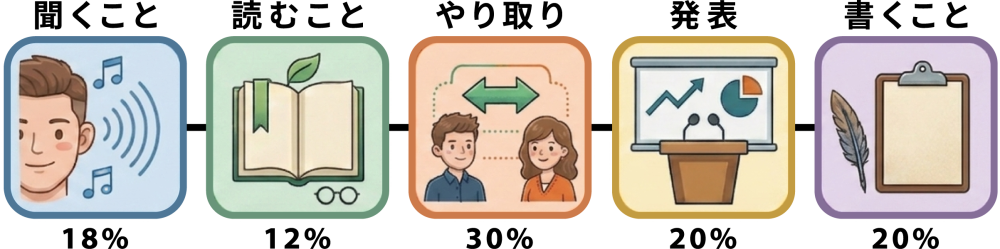
Sample Can-do Statements
【Listening】
Can listen to and understand conversations about the weather, self-introductions, as well as strengths and weaknesses.
【Reading】
Can read short texts about foreign travelers’ experiences, hobbies, and gifts.
【Spoken Interaction】
Can ask and answer questions about Japanese things, and communicate one’s own wishes or reasons for being absent from school.
【Spoken Production】
Can introduce oneself and one’s hometown, and explain the characteristics of a place and what can be done there.
【Writing】
Can write about one’s daily life, clothing, reasons for studying Japanese, and career paths after graduation.

for Higher Education
This program cultivates the ability to respond confidently and take independent action in various situations both inside and outside the school. Emphasizing task achievement in Japanese, the curriculum incorporates 30 action-oriented tasks and 19 familiar topics. While daily kanji study solidifies the foundation for reading and writing, students utilize A2-level materials to extract necessary information from texts, charts, and diagrams, developing their skills in inference and comprehension. Lessons combine tutorial-style learning from instructors with hands-on, practical experiential sessions modeled after real-world scenarios, enabling students to acquire both systematic knowledge and expressive capabilities.
Topic
Future career path & goals, hospital visits & notifying when unwell, honorifics rules & Japanese ways of thinking, earthquake & disaster preparedness, consultative communication, Japanese daily life etiquette, etc.
for Employment
With an eye toward daily life in Japan and future job-hunting activities, students will develop the ability to explain and write about their goals, desired jobs, and motivations using simple Japanese. The objective is to comprehend the main points of conversations regarding daily life or work-related topics and engage in basic communication. Furthermore, when facing challenges, students will learn how to proactively gather information by utilizing surrounding people or smartphones, while also aiming to enhance practical communication skills through intercultural collaborative exchange.
Topic
Future career path & work goals, business etiquette in Japanese companies, Hou-Ren-So (Report, Contact, Consult), workplace communication, job interview questions, key points regarding residence status, etc.
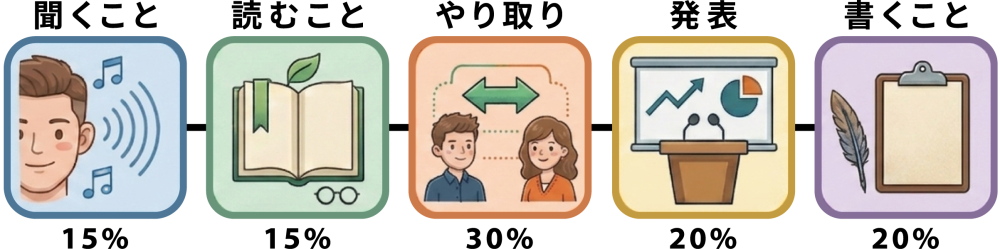
Sample Can-do Statements
【Listening】
Can listen to and understand conversations about the purpose of coming to Japan, school or workplace rules, and social issues such as global warming.
【Reading】
Can read and understand texts such as diaries, letters, and articles regarding issues in part-time jobs.
【Spoken Interaction】
Can make requests considerately and decline politely to avoid offending others, engaging in interactions that build smooth interpersonal relationships at work or school.
【Spoken Production】
Can speak about one’s life or career goals by providing concrete examples, and present on insights gained from reading the news or on one’s Japanese language learning.
【Writing】
Can write about future career plans and the purpose of studying Japanese, and organize one’s thoughts while comparing two different pieces of information.

for Higher Education
Through 26 action-oriented tasks covering social themes and 74 intermediate grammar patterns, this program cultivates the ability to think and communicate in Japanese based on objective information. The curriculum also comprehensively covers polite expressions that show consideration for others’ perspectives, effective communication strategies, and the utilization of technology. Under a problem-solving approach, the course combines tutorial-style and practical experiential lessons, helping students enhance their ability to resolve issues in Japanese through discussions and group work. It aims to develop advanced language proficiency directly linked to students’ future pathways.
Topic
Purpose of coming to Japan & future career path, using social media wisely, information-gathering skills online, solving familiar problems, tactful ways to decline, sharing your experiences, tips for exchanging opinions, etc.
for Employment
Students will develop the ability to logically explain their future goals and concrete career plans. While deeply understanding a diverse range of topics regarding work and daily life, they will repeatedly practice smooth communication by accurately conveying their thoughts to others. Furthermore, they will not only deepen their understanding of Japanese society and multicultural environments but also gain practical experience in writing various application documents and drafting personal statements—skills directly required for actual job-hunting activities—thereby building a solid foundation for achieving their career goals.
Topic
Resumes & application documents, interviews, self-promotion & motivation for applying, BJT Business Japanese Proficiency Test, knowledge to prevent employment disputes, current events regarding foreign labor, post-offer procedures & job preparation, etc.
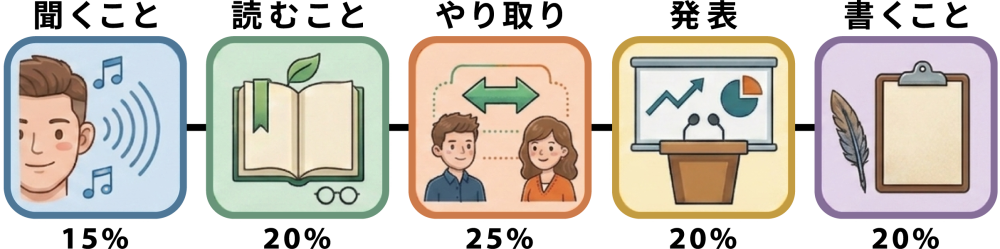
Sample Can-do Statements
【Listening】
Can listen to and understand conversations about upcoming challenges, the daily lives of international students, and school rules.
【Reading】
Can read information essential for living in Japan, such as customer service expressions used by convenience store staff, actions to take during an earthquake, and friends’ diaries.
【Spoken Interaction】
Can listen to a friend’s worries and offer advice, ask questions about the details of announcements or campaigns, and discuss solutions to social issues.
【Spoken Production】
Can explain one’s own personality and mindset, changes in society or oneself, and introduce convenient services.
【Writing】
Can write a letter to the school principal, explain Japanese rules and manners, and summarize news or advice related to one’s hobbies.

for Higher Education
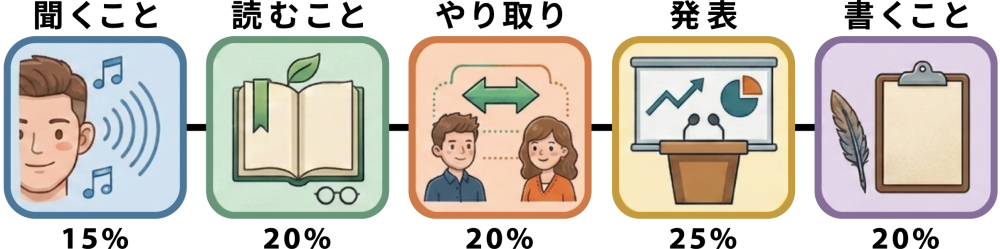
This top-tier level is designed for learners preparing to enter higher education, aiming to cultivate their ability to learn proactively and express their own ideas. Moving beyond simple language acquisition, the curriculum emphasizes “delivering information that holds value for the recipient,” fostering the academic mindset required after enrollment.
Based on the action-oriented approach, classes focus on social themes, reading comprehension using book reviews, research-based learning, presentations, and discussions. Students accumulate experience in analyzing information and explaining it with solid evidence. Furthermore, they will reflect on their previously acquired learning strategies to use them purposefully, thereby refining their advanced Japanese proficiency.
By acquiring the comprehensive Japanese language and learning skills to formulate questions, research, and present their thoughts independently, students build a strong foundation to continue learning proactively in higher education.
Topic
AI and modern society, foreign workers & Japan’s working environment, My Number Card & Japanese systems, report writing, job interviews that boost impression, choosing books based on reviews, logical writing, communication for requests & permissions, etc.
Sample Can-do Statements
【Listening】
Can listen to and understand conversations about the difficulties of learning Japanese, children’s future occupations, and the advantages of reading light novels.
【Reading】
Can read texts written about the characteristics of human communication, issues in scientific research, and the new values held by young people.
【Spoken Interaction】
Can exchange opinions regarding socializing at work, how to facilitate group work, and the relationship between social media and happiness levels.
【Spoken Production】
Can speak about one’s childhood dreams, one’s preferences in books, and the characteristics of conversations on social media.
【Writing】
Can write about an impressive past experience, the meaning of learning a foreign language, and one’s own thoughts on what it means to be an “adult.”

The B2 level represents the starting line for practical and academic pursuits, enabling students to independently engage in specialized studies and professional work. At Toyo Language School, students start learning Japanese from the beginner level, complete the B1 level in their first year, and advance to the B2 level in their second year. We also prepare students for Japanese language proficiency exams such as the JLPT (N1 and N2) and the EJU, allowing them to officially certify their language skills.
From this point forward, you will challenge yourself to achieve your career goals in destination-specific classes tailored to each of your unique learning objectives.